
How Grit Is Grown
Not a trait. A practice.

The Assumption We Often Get Wrong
There is a common assumption that grit is something you're born with, a kind of hardwired temperament. People are often described as having it or lacking it, as though it were a trait that arrived fully formed and immutable. But this view is incomplete. It overlooks the fact that grit is more often constructed than inherited. It is not a fixed part of personality, but something shaped by the conditions a person is exposed to, the meaning they make of those conditions, and the actions they choose in response.
Grit tends to be most visible in moments of friction, when progress is slow, when feedback is unclear, when the outcome is uncertain. It reveals itself in how a person behaves when there is little external reward and no immediate resolution in sight. And while some individuals may appear to possess this quality more readily, what they usually have is a history of having developed it through effort, failure, and repetition.
It does not emerge from raw enthusiasm or hopeful thinking. It emerges from the sustained decision to continue, even when continuation is difficult to justify. It is influenced by how people interpret struggle, how they narrate setbacks, and how they organise their identity around effort that does not immediately pay off.
The following explores how grit grows in professional settings, what kinds of environments make it more or less likely to appear, and how, if left unexamined, it can begin to work against the very progress it was meant to support.

What Is Grit?
Grit is often misunderstood as a form of enthusiasm or force of will. But it is neither impulsive energy nor sheer stubbornness. It is best understood as the capacity to maintain direction and effort in the face of sustained difficulty, especially when immediate progress is absent and recognition is delayed. It is not dependent on mood, nor does it rely on external validation. It is a pattern of choosing to continue when most of the typical reinforcements for persistence are unavailable.
Psychologist Angela Duckworth, who popularised the concept, defines grit as the intersection of passion and perseverance over time. This is helpful, but it does not always capture how grit feels from the inside. In practice, it is often unglamorous. It may involve long periods of repetition, working without certainty, and maintaining belief in the value of a task that others do not yet recognise. There is often no applause, no clear sense of momentum, and no guarantee that the effort will produce the desired result.
What gives grit its shape is not intensity, but consistency. It is not the refusal to fail, but the refusal to withdraw. It draws from a deeper architecture of meaning; the internal belief that the work matters, that the standard is worth holding, and that the discomfort of endurance is preferable to the discomfort of regret.
In this way, grit functions as a stabilising structure within a person. It allows for forward motion without requiring conditions to be perfect or even promising. It does not seek crisis, but it is not disrupted by it. It holds effort in place while the external environment remains unresolved. And over time, it can become one of the most reliable indicators of whether meaningful work will be sustained long enough to produce anything of value.
Nature or Nurture?
The question of whether grit is something people are born with or something they learn has been the subject of considerable research. The weight of evidence points to the latter. While some temperamental factors may make the development of grit easier, most studies suggest it is shaped primarily by experience, belief, and exposure to difficulty over time.
Grit tends to appear more consistently in individuals who hold certain foundational convictions. Carol Dweck’s work on growth mindset, for instance, has shown that people who believe their abilities can be developed are more likely to persist under strain. Their effort does not rely on the belief that success is guaranteed, but on the belief that improvement is possible. This orientation affects not only performance but also recovery from failure.
Albert Bandura’s theory of self-efficacy reinforces this view. When individuals believe they can influence outcomes through their actions, they tend to endure longer in the face of uncertainty. The confidence is not in immediate results, but in the process of cause and effect. It builds a form of accountability that sustains attention even when progress is unclear.
The findings from neuroscience are consistent with this behavioural data. Research into neuroplasticity confirms that the brain is shaped by repeated patterns of effort and adaptation. Behaviours that are practiced, especially those tied to perseverance, become more accessible with time. This means that grit is not just psychological, but physiological. The systems that support endurance are reinforced through their own use.
What emerges from this body of work is the idea that grit is less about temperament and more about response. It is not something you either have or lack, but a set of mental and behavioural routines that can be formed, refined, and sustained. It becomes most available to those who hold a specific set of beliefs: that effort is meaningful, that difficulty is not conclusive, and that persistence is worth cultivating even when the outcome remains in doubt.
Conditions That Grow Grit
Grit is not something that typically forms in comfort. Nor does it grow reliably in chaos. It emerges through prolonged contact with structured difficulty; situations where the individual is challenged, but the challenge is intelligible. For grit to develop, the environment must demand effort while still offering a coherent path forward. Random stress does not produce resilience. It produces fatigue. What builds grit is a combination of pressure and meaning.
In practice, several conditions tend to support the growth of grit:
Regular exposure to work that requires sustained effort across time
Feedback that makes failure understandable and usable, rather than personal
A sense of agency in deciding how to approach and resolve problems
These elements allow difficulty to be interpreted as part of the process, not a signal that something has gone wrong. When people know that effort is expected, that learning is permitted, and that autonomy is respected, they are more likely to develop internal structures that support long-term perseverance.
This is particularly important in professional contexts, where performance is often evaluated on visible outcomes. Grit is more likely to grow when the focus includes how people navigate tension, not just how quickly they escape it. Environments that reward speed without regard for complexity tend to suppress the development of grit. By contrast, environments that frame setbacks as expected and surmountable give people the opportunity to engage more deeply with their own limits.
Grit is not simply a matter of working harder. It is the ability to hold attention, intention, and effort in alignment over time, even when momentum is unclear. That alignment becomes more durable when the surrounding environment makes difficulty legible and the pursuit worthwhile.

Seeking Difficulty (Rather Than Waiting for It)
Endurance is often assumed to be a reaction to adversity; something activated only when hardship arrives. But some of the most resilient professionals are those who do not wait for external pressure to define the terms of their development. They move toward difficulty before it is imposed. They train in environments where the stakes are low so that they are prepared when the consequences are high.
This is not about unnecessary self-denial or manufacturing struggle for its own sake. It is about deliberate exposure to challenge as a means of becoming more capable. The research supports this approach. Studies on what Bjork and Bjork termed “desirable difficulty” show that deeper learning and longer retention occur when the task requires effort. Strain, when meaningfully structured, produces more durable skill.
Similarly, Julian Rotter’s work on locus of control found that individuals who see outcomes as shaped by their own actions, rather than dictated by external conditions are more likely to engage with harder problems. The belief that action matters creates a different relationship to risk. It moves people away from avoidance and toward experimentation.
What distinguishes those who grow from those who stagnate is often not whether they experience resistance, but when and how they encounter it. Resistance that is chosen tends to be more interpretable than resistance that arrives unannounced. When professionals put themselves in unfamiliar or uncomfortable positions on purpose, and when they do so with the aim of refinement rather than performance, they build a different kind of psychological infrastructure.
There is a significant difference between tolerating difficulty and using it. Enduring what is inflicted can build a form of toughness, but it does not necessarily build capacity. Seeking what is difficult, within reason and in pursuit of something meaningful, develops fluency under pressure. And that fluency is often what separates reflex from wisdom in moments that matter.

The Role of Self-Talk and Framing
The language we use to describe our experiences does more than reflect what we think. It shapes what we are able to do. Nowhere is this more evident than in moments of sustained effort. When pressure builds and the outcome is uncertain, the way we narrate the experience to ourselves becomes a critical part of how we endure it.
Research into cognitive reappraisal, the process of reframing a situation to alter its emotional impact, shows that people who interpret effort as useful rather than punitive are better able to regulate stress. They are less likely to disengage, less prone to burnout, and more capable of sustaining attention over time. What they believe about the value of strain changes how their system processes it.
This is not a matter of blind optimism. It is the difference between interpreting difficulty as evidence of failure and interpreting it as part of the learning process. When effort is seen as a signal that something worthwhile is happening, rather than a symptom that something has gone wrong, it becomes more tolerable. And over time, more instructive.
Adaptive explanatory styles; the ways individuals explain setbacks, have been linked to higher resilience in both academic and occupational domains. People who view setbacks as specific, temporary, and related to controllable factors tend to recover faster and make more useful adjustments. Those who generalise failure or treat it as personal deficiency are more likely to withdraw or double down on unproductive effort.
Framing is not spin; It does not deny what is difficult. Instead, it gives shape to experience so that it can be acted upon rather than avoided. It does not eliminate struggle, but it renders it intelligible, and that shift in perception can often be the difference between stagnation and growth.
It’s best developed before it’s required. And best applied in service of something that justifies the weight.
When Grit Becomes Misapplied
Grit is not always a virtue. It can be misdirected, overextended, or misinterpreted. In some cases, it becomes a mask for inertia; the unwillingness to examine whether the original direction still makes sense. What appears to be perseverance can sometimes be a refusal to adapt.
Misapplied grit tends to reveal itself when persistence is no longer tethered to learning. The individual continues, but without evaluation. Difficulty becomes its own justification, rather than a prompt for reflection. It is not uncommon for professionals to become so invested in the identity of being resilient that they forget to assess whether the path is still valid.
This often shows up in familiar ways. A strategy that no longer fits the market is repeated, not because it is right, but because it is familiar. Feedback is resisted, not because it lacks merit, but because it threatens momentum. Effort becomes a shield, protecting the person from the discomfort of reevaluating what was once certain.
Healthy grit includes the ability to pause. To recognise when persistence is no longer producing insight. And to acknowledge that stopping, adjusting, or redirecting is not a failure of commitment, but often a deeper form of it. Adaptation is not the opposite of grit. It is its most refined application.
In Closing
Grit is rarely dramatic. It does not draw attention to itself. It is not associated with breakthroughs so much as with continuity. But it is often the underlying condition that allows real progress to occur- not in a single moment, but across time.
It develops through exposure to difficulty, but only when that difficulty is understood and reflected upon. It is not about glorifying struggle, nor about seeking pain. It is about the quiet, repeated decision to continue when other options feel easier. And it is strengthened when effort is connected to something meaningful.
Grit, properly formed, is not just the ability to endure. It is the ability to carry something worthwhile through effort, and to adjust course without abandoning purpose.
It grows through discipline, but it matures through discernment. And when difficulty is approached with both, the result is not just survival, it is strength that is transferable, durable, and a reference point for your future self.
Similar Posts We Think You’ll Like


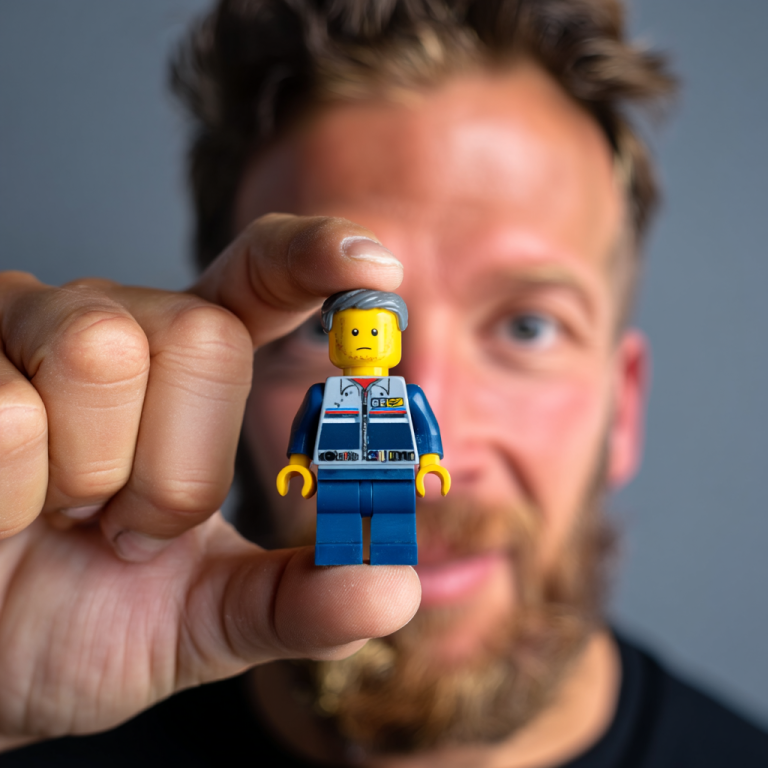






Grit isn’t born in crisis. It’s developed through deliberate exposure to challenge. This article explores how professionals can cultivate endurance before it’s needed, drawing on cognitive science and real-world application.